At-Home Workouts You Can Do in 20 Minutes
Short on time? Try these 20-minute at-home workouts—HIIT, strength, yoga, and core—to build endurance, power, and mobility with little or no equipment.
Quick Warm-Up Primer: Even in a 20-minute window, devoting the first few minutes to a smart warm-up pays off with better performance and fewer aches. Start with easy marching or step taps to raise your heart rate, then add arm circles, hip hinges, and ankle rocks to wake up stiff joints. Flow into inchworms, glute bridges, and open-book rotations to activate core and posterior chain. Focus on smooth breathing and tall posture, keeping your neck relaxed. If space is tight, pivot moves in place rather than traveling across the room. Beginners can stick to low-impact versions; seasoned exercisers can add bounce or faster tempos. Use an effort guide like RPE — rate of perceived exertion — aiming for a gentle 4 to 5 out of 10 by the end of the warm-up. This mobility and activation prep primes your hips, knees, shoulders, and spine so the main set feels crisp, safe, and energizing from the first rep.
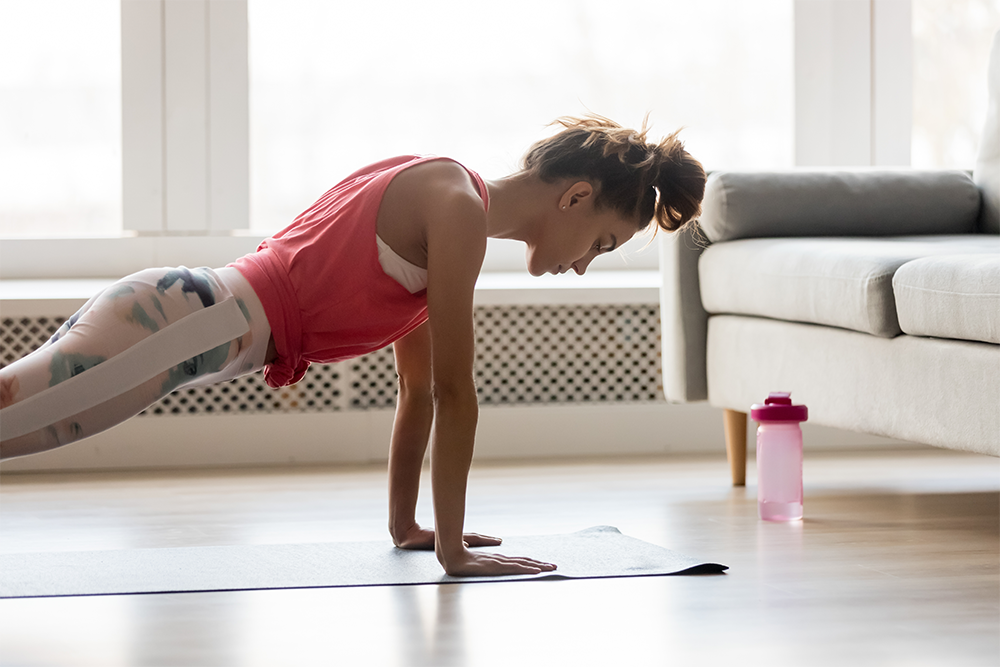
No-Equipment HIIT Circuit: When time is tight, a short burst of high-intensity interval training can deliver a surprising conditioning boost without equipment. Choose four moves that hit different muscles and alternate patterns: squat to knee drive, plank shoulder taps, reverse lunge, and mountain climbers. Work 40 seconds, rest 20 seconds, cycle through all four, and repeat for several rounds. Keep your chest proud, knees tracking over mid-foot, and hands stacked under shoulders to protect joints. If jumping bothers your joints, swap in low-impact options like step-back lunges and marching high knees. Keep a towel or mat for grip and comfort. Aim for a steady, breathable rhythm rather than redlining too early; you should be able to speak short phrases but not hold a conversation. This HIIT approach layers cardio, coordination, and muscular endurance, making each minute count while still respecting form and recovery.
Strength Builder Bodyweight Ladder: Strength gains at home rely on smart structure and controlled tempo. Create a circuit with push-ups, air squats, hip-hinge good mornings, split squats, and prone superman pulls. Start with six to eight reps per move, rest about 30 seconds, then repeat and add a rep each round until your form slows. Use a chair or countertop for incline push-ups, and hold a backpack for added load if needed. Think slow down, strong up to build time under tension, and keep your ribs tucked for a braced core. Drive knees out on squats, keep weight in mid-foot, and press the floor away on split squats. If you prefer a timer, set two five-minute blocks with two exercises each, alternating sets while keeping one minute as a buffer. This progressive overload style in a compact window builds practical strength without any gear, supporting overall health and daily performance.
Core and Mobility Finisher: A balanced core routine supports every movement you do, from lifting groceries to sprinting up stairs. Pair stability with mobility for a polished finish. Move through dead bugs, side planks, bird dogs, and hollow body holds, emphasizing a gentle posterior pelvic tilt and steady nose-to-mouth breathing. Add mobility moves between sets such as a world's greatest stretch, thoracic rotations on the floor, hamstring flossing, and calf or ankle rocks near a wall. Keep each effort controlled for 30 to 45 seconds, then rest briefly so you can maintain crisp form. Reduce range if your lower back wants to arch; expand range once your brace feels solid. This blend builds bracing, control, and range of motion while easing stiffness from desk time. In about twenty minutes, you will feel taller, looser, and ready to take on the rest of the day, with a stronger foundation for every workout.
Recovery, Habit, and Progress: Fast sessions deliver results when they are repeatable and kind to your body. Cool down with easy walking in place and deep, slow breaths, then stretch calves, hips, chest, and lats for a minute or two each. Sip water and note how you feel on a simple scale of energy and effort. Track a few markers such as total rounds, best plank time, or smoothest push-up depth to see progress without chasing extremes. Rotate themes across the week, for example one day HIIT, one day strength, and one day core and mobility, leaving at least one full rest day. Use habit stacking by pairing a workout with an existing routine like brewing coffee or finishing a meeting. Set micro goals such as one more rep with perfect form. Above all, prioritize consistency and recovery so your health, mood, and resilience steadily improve.